


It forms hydrates CuSO4·nH2O, where n can range from 1 to 7. The pentahydrate (n = 5) is the most common hydrate of copper (II) sulfate. Older names for the pentahydrate include blue vitriol, bluestone, vitriol of copper, and Roman vitriol.
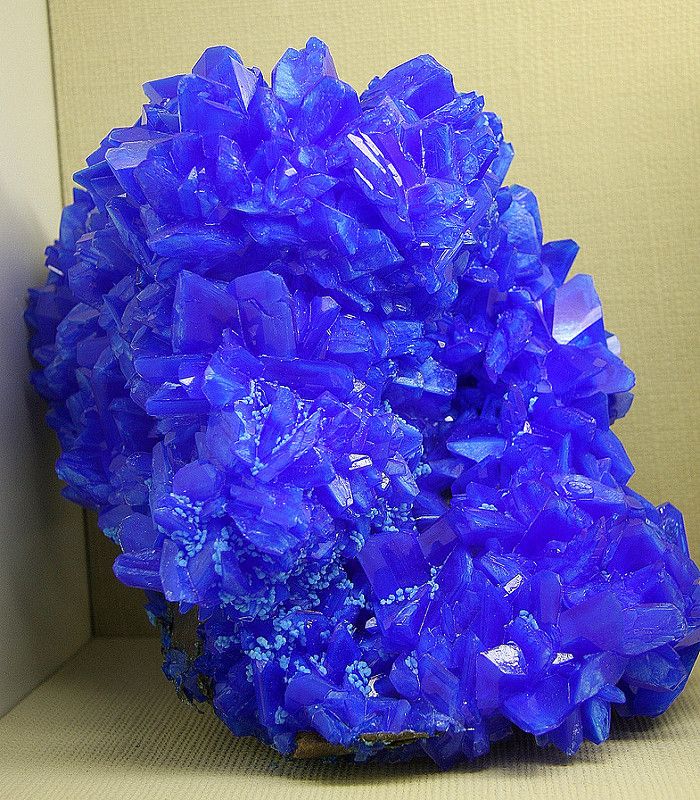
The bright blue pentahydrate CuSO4·5H2O is the most commonly encountered form of copper (II) sulfate. It exothermically dissolves in water to give the aquo complex [Cu(H2O)6]2+, which has octahedral molecular geometry. The structure of the solid pentahydrate reveals a polymeric structure wherein copper is again octahedral but bound to four water ligands. The Cu(II)(H2O)4 centers are interconnected by sulfate anions to form chains. Anhydrous copper sulfate is a light grey powder.
As a fungicide and herbicide
Copper sulfate has been used for control of algae in lakes and related fresh waters subject to eutrophication. It "remains the most effective algicidal treatment".
Bordeaux mixture, a suspension of copper (II) sulfate (CuSO4) and calcium hydroxide (Ca(OH)2), is used to control fungus on grapes, melons, and other berries. It is produced by mixing a water solution of copper sulfate and a suspension of slaked lime.
A dilute solution of copper sulfate is used to treat aquarium fishes for parasitic infections, and is also used to remove snails from aquariums and zebra mussels from water pipes. Copper ions are highly toxic to fish, however. Most species of algae can be controlled with very low concentrations of copper sulfate.
Several chemical tests utilize copper sulfate. It is used in Fehling's solution and Benedict's solution to test for reducing sugars, which reduce the soluble blue copper (II) sulfate to insoluble red copper(I) oxide. Copper (II) sulfate is also used in the Biuret reagent to test for proteins.
Copper sulfate is used to test blood for anemia. The blood is dropped into a solution of copper sulfate of known specific gravity – blood with sufficient hemoglobin sinks rapidly due to its density, whereas blood which sinks slowly or not at all has an insufficient amount of hemoglobin.
In a flame test, the copper ions of copper sulfate emit a deep green light, a much deeper green than the flame test for barium.
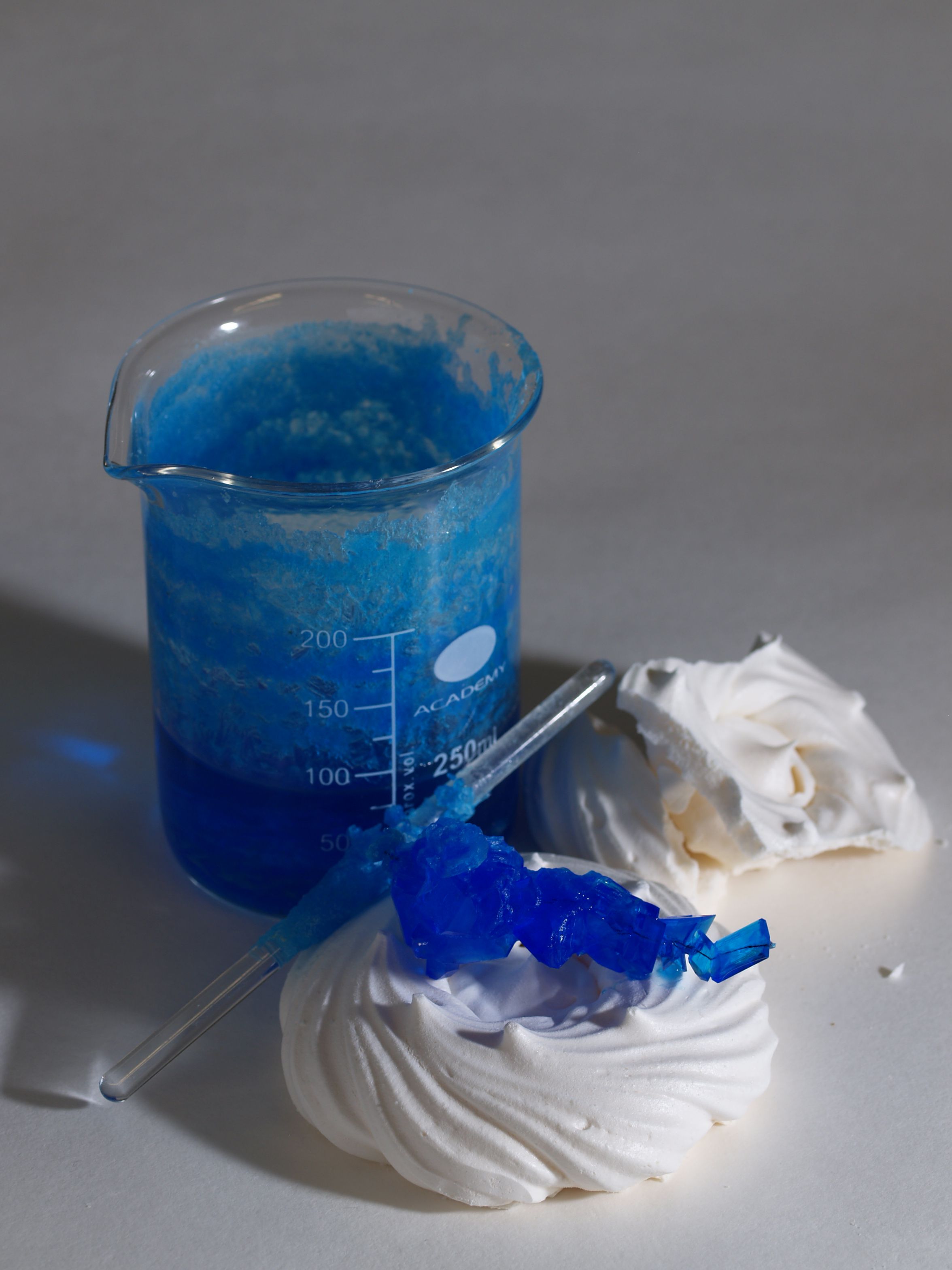
Copper sulfate is employed at a limited level in organic synthesis. The anhydrous salt is used as a dehydrating agent for forming and manipulating acetal groups. The hydrated salt can be intimately mingled with potassium permanganate to give an oxidant for the conversion of primary alcohols.
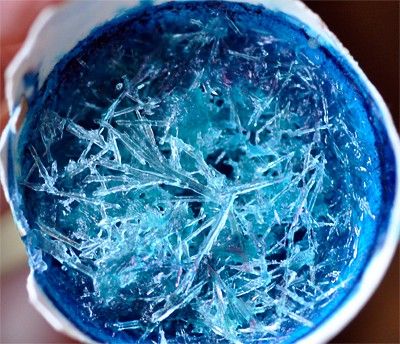
Reaction with ammonium hydroxide yields Tetraamminecopper (II) sulfate or Schweizer's reagent which was used to dissolve cellulose in the industrial production of Rayon.